


Authors of this 'Two Minute Tuesday' include: Eric Hewitt, Chris Procor, and Richard Baker
At first glance, the US labor market appears remarkably healthy.
Unemployment remains historically low, layoffs have not meaningfully increased, and payroll employment continues to grow. By many traditional measures, this should be an economy experiencing a robust employment cycle.
Yet there is an increasing disconnect between what the headline statistics suggest and what many of us are hearing from friends, neighbors, business contacts, and recent graduates. Looking beyond the unemployment rate, a growing body of labor market data points to something very different: a labor market that hasn't collapsed—but has increasingly frozen in place.
Many companies have become reluctant to add new employees. Outside of a handful of industries, hiring has slowed considerably, leaving fewer opportunities for job seekers—particularly younger workers trying to enter their chosen profession. Employees who already have jobs are staying put because attractive alternatives have become harder to find, while employers are reluctant to reduce headcount after the hiring challenges of the past several years.
At the same time, a larger structural force is quietly reshaping the labor market. America's workforce is aging, retirements continue to accelerate, and labor force participation has gradually declined from prior peaks. Fewer people are participating in the workforce, reducing the pool of available workers and limiting the natural movement that has historically characterized a healthy labor market.
Our team has started referring to this environment as the STALE Labor Market—our shorthand for what we believe is happening beneath the surface of today's employment data.
STALE stands for:
- S – Sluggish hiring
- T – Tepid job creation
- A – Anemic immigration
- L – Low layoffs
- E – Eroding labor force participation
Viewed individually, none of these trends is especially alarming. Together, however, they describe a labor market that has become increasingly frozen, with fewer workers entering, fewer employees changing jobs, and fewer companies expanding their workforces.
S – Sluggish Hiring
Hiring activity has slowed meaningfully from the post-pandemic surge.
The Job Openings and Labor Turnover Survey (JOLTS) shows hiring rates drifting lower over the past two years. While many companies continue to post openings, hiring decisions have become more selective and expansion plans have slowed.
For younger workers and those seeking a career change, the result has been a much more challenging job market despite historically low unemployment.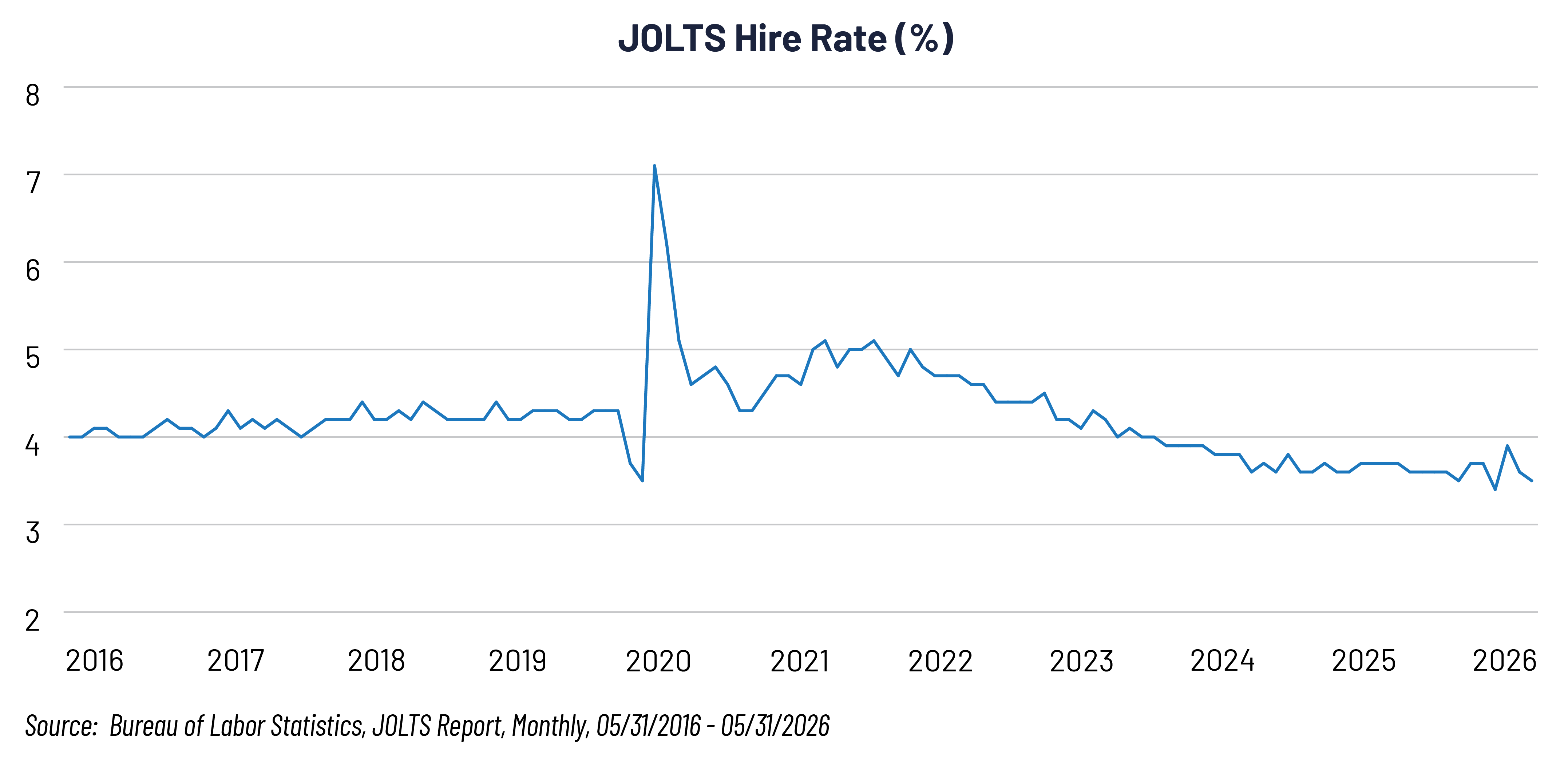
T – Tepid Job Creation
Payroll employment continues to grow, but at a pace more consistent with a mature expansion than a growing economy.
Much of today's employment growth has been concentrated in healthcare, education, and government, while hiring across many private-sector industries has moderated significantly.
The economy continues to add jobs—but not enough to generate the level of labor market turnover that has traditionally accompanied strong economic growth.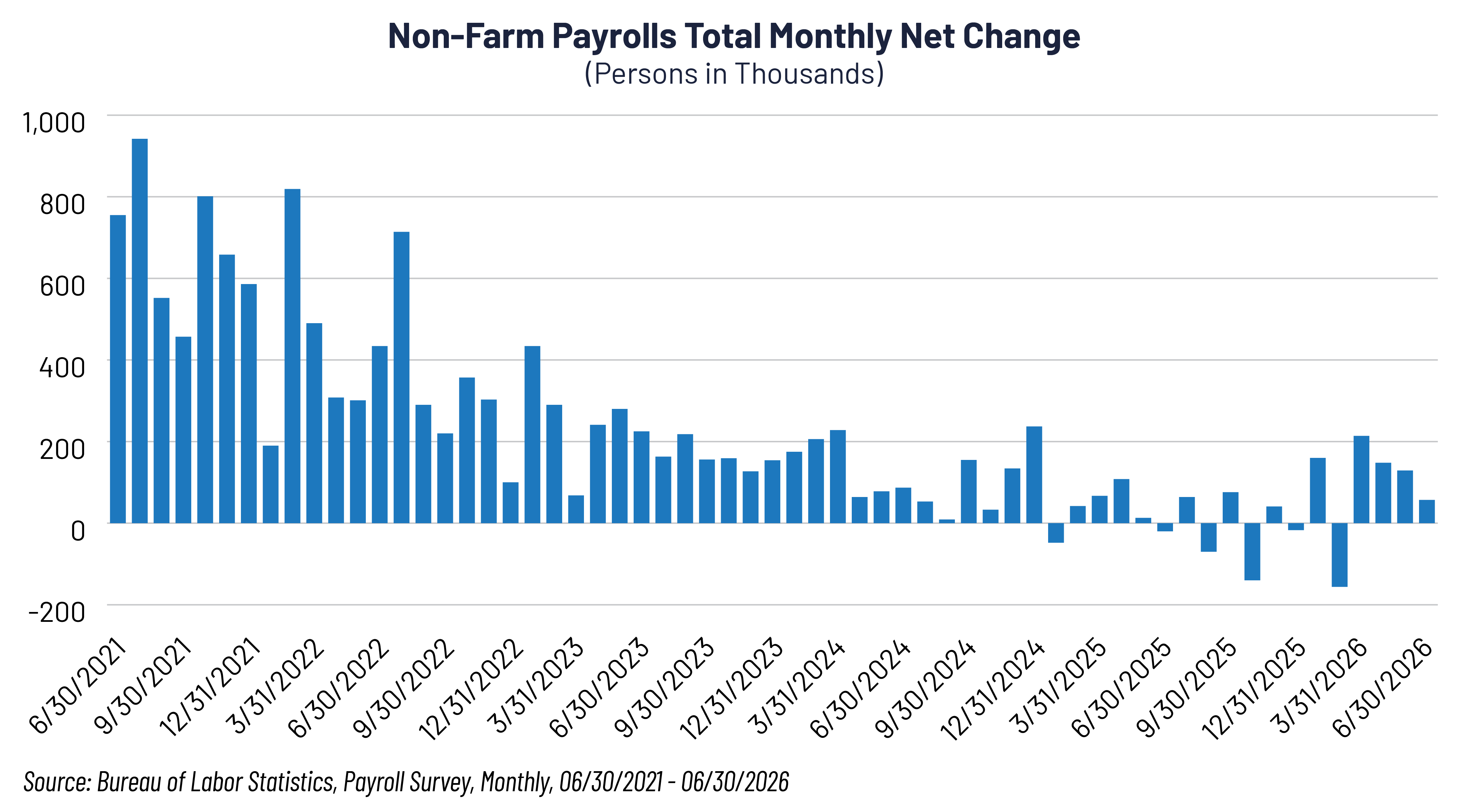 A – Anemic Immigration
For decades, immigration has helped offset America's aging population by expanding the labor force and supporting economic growth.
Although immigration has recovered from pandemic disruptions, workforce growth remains constrained by demographic trends. With millions of Baby Boomers entering retirement, immigration has become an increasingly important source of labor force growth.
Without sufficient new workers entering the economy, labor shortages become more persistent and long-term economic growth becomes more difficult to sustain.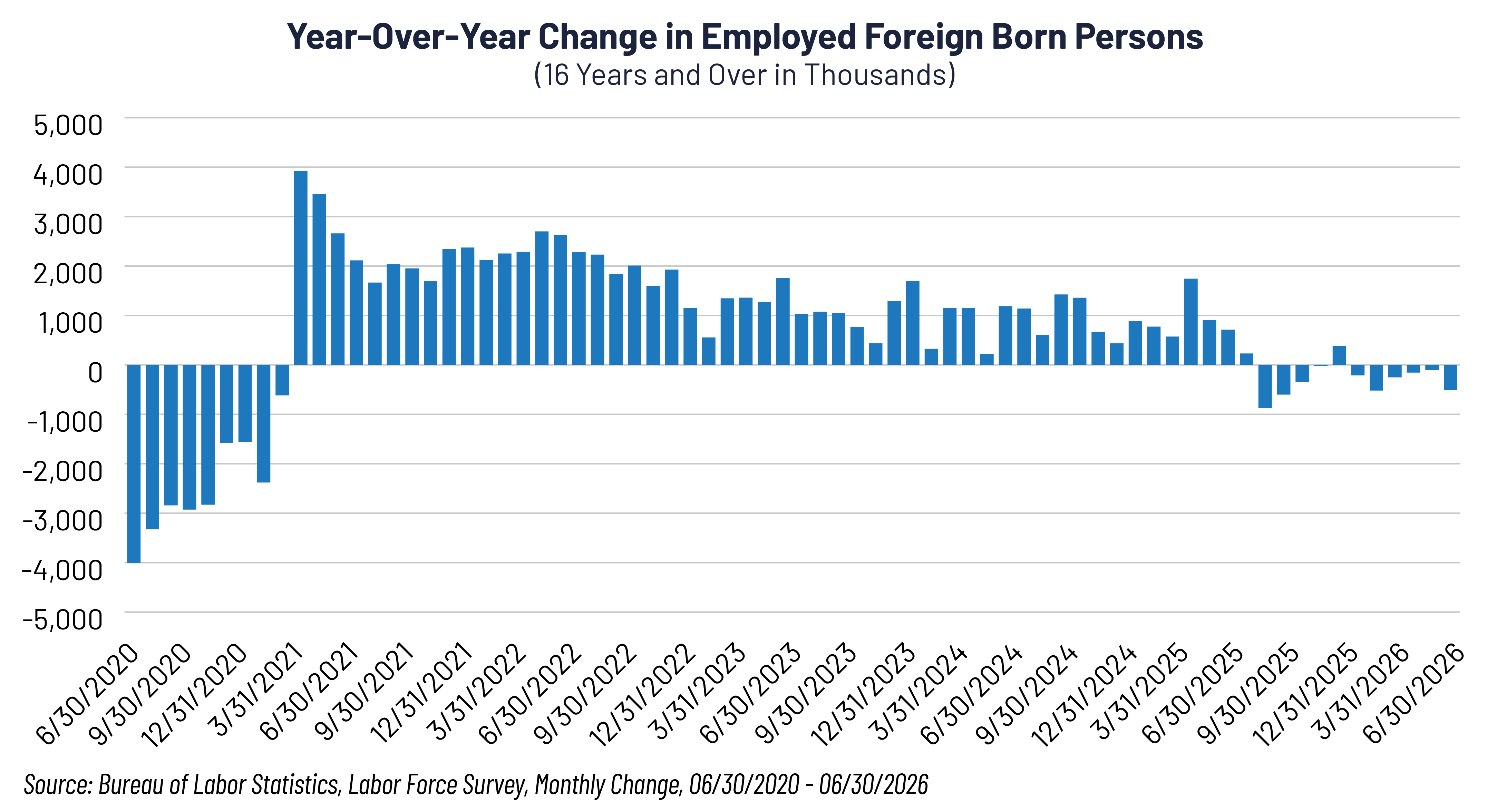
L – Low Layoffs
One of the defining characteristics of today's labor market is the unusually low level of layoffs.
Businesses remember how difficult it was to recruit employees following the COVID-19 pandemic and appear determined not to repeat that experience. Rather than reducing staff during periods of slower demand, many employers are choosing to retain experienced workers.
This has helped keep unemployment low—but it has also reduced labor market turnover. Fewer layoffs means fewer job openings, fewer career moves, and less opportunity for workers trying to enter or re-enter the labor market.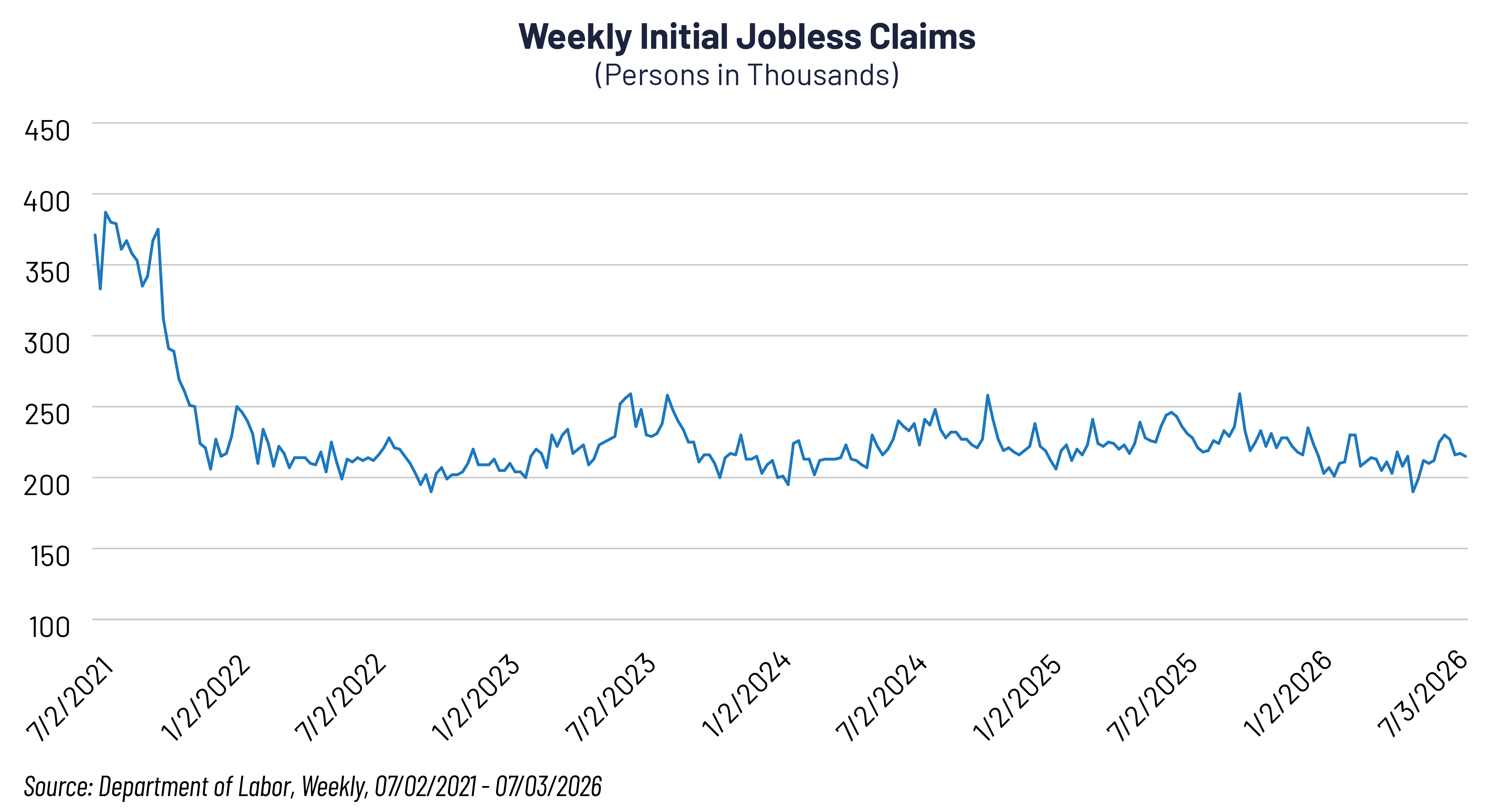 E – Eroding Labor Force Participation
This may be the most important structural trend of all.
The unemployment rate measures only people actively looking for work. It says nothing about those who have retired, stopped looking, or never entered the workforce in the first place.
Labor force participation has faced steady pressure from an aging population, increased retirements, and changing workforce preferences. As millions of Baby Boomers leave the workforce, fewer younger workers are available to replace them. While participation among prime-age workers has recovered impressively, the overall participation rate remains well below the levels seen before the Global Financial Crisis.
The result is a smaller, slower-growing workforce that limits hiring, reduces economic flexibility, and contributes to the increasingly frozen labor market we see today.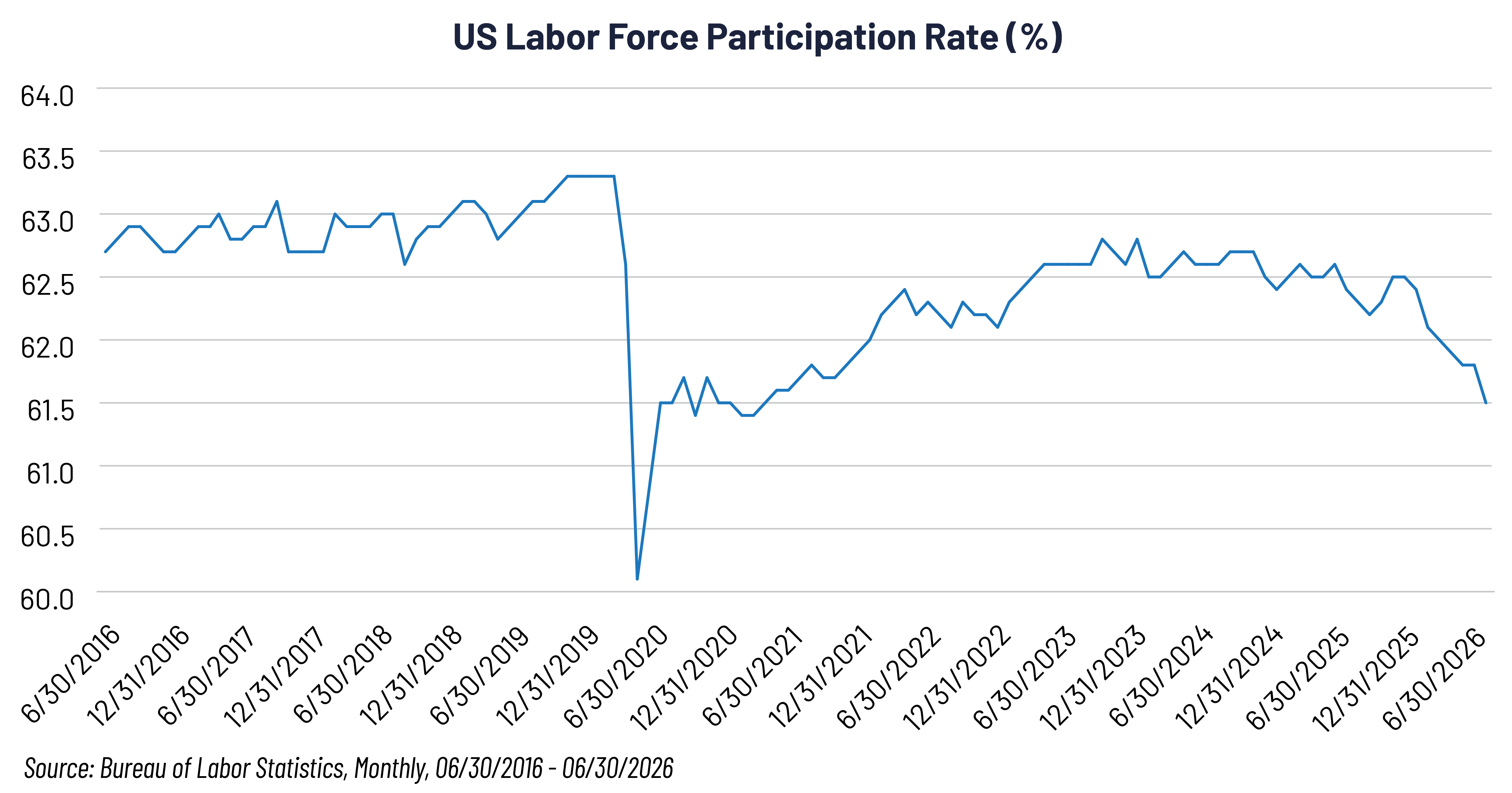 Why It Matters
The STALE labor market is not necessarily a warning that recession is imminent.
Instead, it suggests that the labor market has become increasingly frozen.
Companies are slow to hire.
Companies are slow to lay people off.
Workers are staying where they are.
Fewer new workers are entering the labor force as the population ages.
Economic growth continues—but the normal movement that defines a healthy labor market has slowed considerably.
For investors, this distinction matters. The unemployment rate remains an important economic indicator, but it no longer tells the complete story. Understanding the underlying flows of workers into, out of, and within the labor market may provide a better indication of where the economy is headed than unemployment alone.
What Could Break the STALE Cycle?
Several developments could restore greater movement to today's employment picture.
Renewed Business Confidence. Improving economic visibility, stronger earnings, or lower interest rates could encourage businesses to accelerate hiring and invest for growth.
A Reacceleration in Labor Force Growth. Higher labor force participation, increased immigration, or delayed retirements would expand the available workforce and improve labor market flexibility. Given America's demographic outlook, this may be the most important long-term solution.
Artificial Intelligence (AI) and Productivity. AI has the potential to increase productivity, lower hiring costs, and create entirely new categories of employment. Like previous technological revolutions, it is likely to eliminate some jobs while creating others, ultimately increasing labor market dynamism.
A Rise in Layoffs. Although undesirable in the short run, a modest increase in layoffs could increase labor market mobility by creating more opportunities for hiring and job matching. If layoffs became widespread, however, recession risks would rise significantly.
Looking Beyond the Headline Number
The unemployment rate remains one of the most closely watched economic indicators, but it was never intended to tell the entire story.
Today's labor market appears less like a traditional expansion or contraction and more like a system that has gradually slowed. Hiring has cooled. Job creation has moderated. Immigration has not fully offset demographic change. Layoffs remain unusually low. And labor force participation continues to face structural pressure from an aging population.
That's the idea behind the STALE framework: not a weak labor market, but a frozen one.
Whether STALE proves to be a temporary phase or a defining characteristic of the post-pandemic economy remains to be seen. Either way, investors should look beyond the headline unemployment rate. The underlying movement—or lack of movement—within the labor market may prove to be one of the most important economic stories of the coming decade.
Important Disclosures & Definitions

AAI001192